Showing posts with label Chevrolet Silverado. Show all posts

Monday, January 10, 2011

America's Top 10 Selling Vehicles in 2010


The U.S. auto sales numbers for 2010 are out and once again, Ford's F-Series pickup truck has been crowned the best-selling vehicle of the year, a title which it has held for 34 years in a row. According to Autodata Corp., the Dearborn-based brand moved 528,349 units of its F-150 light-duty and F-250, F-350 and F-450 heavy-duty trucks in 2010, recording an impressive increase of 27,7 per cent over 2009.

The Chevrolet Silverado took second place with 370,135 units, or some 158,000 less than the F-Series. Sales of GM's pickup truck were up 16,9 per cent from the previous year. Despite Toyota's recall debacle, the Camry finished third overall earning the title of the best-selling passenger car in the States with 327,804 units, posting an 8.1 per cent drop from 2009. The Honda Accord and Toyota Corolla followed in fourth and fifth positions respectively.

Overall, U.S. automakers had four vehicles on the Top 10 list, while Japanese carmakers took six spots. For more details check out the complete list below that includes percentage changes from 2009.
  1. Ford F-Series------------- 528,349 (+27.7%)
  2. Chevrolet Silverado ------370,135 (+16.9 %
  3. Toyota Camry ------------327,804 (-8.1 %)
  4. Honda Accord-------------282,530 (-1.7 %)
  5. Toyota Corolla------------ 266,082 (-10.4 %)
  6. Honda Civic---------------260,218 (+0.2 %)
  7. Nissan Altima-------------229,263 (+12.6 %)
  8. Ford Fusion---------------219,219 (+21.3 %)
  9. Honda CR-V-------------- 203,714 (+6.5 %)
  10. Dodge Ram-------------- 199,652 (+12.6 %)

Sunday, January 2, 2011

Automakers Developing Significantly Lighter Trucks to Meet New Fuel Economy Standards


Reuters is reporting that major automakers are tirelessly working on reducing the weight of future generation pickup trucks, in order to meet stricter fuel economy standards without sacrificing key abilities, such as power, payload capacity or towing capability.

Until 2016, when the new mandates take effect, manufacturers must reach an average fleet economy of 35.5 mpg (6.63 lt/100 km), while light trucks will have to return around 30 mpg or 7.84 lt/100 km. Given that around 50 per cent of vehicles sold in the U.S. in the first 11 months of the year were light trucks, it’s clear that the likes of Ford and GM have to act fast.

One way of improving fleet economy is by launching EVs and hybrids, but that’s not enough. The average weight in the pickup segment is nearly 5,000 pounds (2,268 kg) and it’s critical to reduce it if the new guidelines are to be met.

Most of the bulk is due to added comfort, electronic and safety features, which made America’s “workhorses” more enjoyable to own over the past decade. But the same equipment also increased weight by 22%, while fuel economy boost was just 2 percent.

To eliminate the aforementioned added features is not an option, as buyers certainly won’t tolerate poorly equipped or less safe products. Same goes for the powerful engines and solid structures, which define the pickup trucks. That leaves makers with just one option: the use of lighter materials, but comparable in strength or other qualities to traditional solutions.

GM is spearheading these efforts with its upcoming Chevrolet Silverado series, due to arrive in 2014. According to the plan, the Chevy trucks are going to be 500 pounds (227 kg) lighter by 2016, while further reductions are expected in the next decade.

To achieve this, engineers plan to use alongside other solutions, blown-in foam as sound deadening material, instead of a cheaper, but heavier, pad.

“It's a tough task, but we're facing it as grown-ups”, said Rick Spina, who leads full-size truck development for GM. “We're going to do everything we can to keep the customer from realizing we've had to make changes in a fundamental way”.

Meanwhile, Ford is reportedly planning to implement a magnesium alloy frame and aluminum body panels for the next generation F-150. Inside sources revealed that these measures could shave as much as 800 pounds (363 kg) off its hot-selling truck series. GM will also use similar lightweight materials for its trucks according to Rick Spina.

However, building the lightweight trucks is one thing and marketing them, another. Lightweight materials cost more and pickup truck prices are likely to increase, which could affect sales. One thing is certain, though: the U.S. government is keen to further reduce overall fleet consumption, as automakers may have to achieve CAFE standards of 62 mpg (3.79 lt/100 km) by 2025.

Saturday, December 25, 2010

GM Issues Separate Recalls on Cadillac CTS and Escalade, and Chevy and GMC Trucks


General Motors is recalling close to 100,000 vehicles in two separate campaigns. In a posting with the U.S. National Highway Traffic Safety Administration [NHTSA], GM said the first recall affects almost 96,000 Cadillac CTS sedans from the 2005-2007 model years over concerns that some of the vehicles have a condition in which repeated flexing of the passenger sensing system mat in the passenger seat may break the connection. The company said that if this occurs, the sensor may not detect the presence of a front seat passenger and will disable the air bag.

Dealers will replace the passenger sensing system free of charge, however, GM has yet to provide an owner notification schedule for the CTS recall.

The second recall from GM concerns approximately 1,260 Cadillac Escalades, Chevrolet Avalanche and Silverado 1500s, and GMC Sierra 1500s, all from the 2011 model year. These trucks may have a faulty rear-axle cross pin, which could fracture and become displaced within the axle.

GM said that if the pin shifts out of position, it could create an interference condition and cause the rear axle to lock, in which case, the driver may not be able to maintain directional control of the vehicle and a crash could occur without prior warning.

The company added that this safety recall is expected to begin during January 2011.

Wednesday, April 22, 2009

GMC Sierra and Chevrolet Silverado Hybrid Pickup Trucks Deliver Fuel Economy

Working on the theory that saving fuel is most important in the vehicles that consume the most, General Motors has introduced the GMC Sierra and Chevrolet Silverado hybrid pickup trucks.

Already out in Yukon and Tahoe SUVs, the two-mode hybrid was developed in a joint venture with Chrysler and BMW. The idea came about as a scaled-down version of GM’s hybrid bus drive train and is especially well-suited to vehicles that need some towing and hauling capability.

The system is distinct from most other hybrid systems because it can automatically run on straight mechanical power as well as pure electric or a combination of the two.

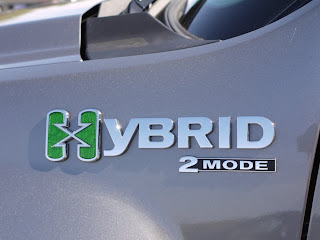
Based on the reengineered Sierra and Silverado pickups that debuted in 2007, the hybrids look the same as the crew cab versions of the base trucks with the exception of some hybrid badges, optional hybrid graphics and a standard tonneau cover that helps out aerodynamics.

The battery pack is underneath the rear seat, and the hybrid drive unit is about the same size as the transmission it replaces. It contains two compact electric motors (one reverses field to generate power) and four mechanical gears.

The two-mode hybrid system sees the most advantage in city driving, so GM planned an all-city driving route as the first demonstration for the press.

Starting off in a four-wheel-drive Sierra rated at 20 mpg n in both city and highway driving, I clocked an indicated average of 22.3 mpg over approximately 75 minutes of driving.

The small print in the EPA ratings do say 16 to 24 mpg is the “expected range for most drivers.” I was driving conservatively, but not to the extent of holding up traffic. My driving partner for the day nearly duplicated my efforts on the return trip with a 22 average mpg reading.

Like other hybrids, the engine shuts off when the vehicle is stopped so as not to idle unnecessarily.

When you start moving again, the hybrid pickups are capable of driving up to a stated 30 mph on electric power alone. The gasoline engine starts up automatically and seamlessly when it is needed.

As I had experienced previously in a GMC Yukon hybrid, it was difficult to start moving at a normal rate without the engine kicking in.

However, once it was rolling with a steady throttle input, the engine would turn off and we were able to run up to around 28 mph on electric power for a quarter mile or so at a time. Above that, engine power would do the driving duties.

Ideally, at the 35 mph cruising speeds we were getting, the truck would run on hybrid power, a combination of gas engine and electric drive, but this seemed hard to maintain unless we were on a longer stretch at steady speed.
When you back off the accelerator and coast, the batteries start recharging. The 6.0-liter V-8 engine will also automatically cruise in four-cylinder mode for extra fuel savings.

Next, two Sierra and Silverado hybrids were hooked to trailers and others were loaded with 800 pounds in their beds. We took a drive towing a 5,400-pound Sea Ray boat with inertia brakes on the trailer.
The hybrid was able to pull the boat in electric mode up to 15 mph. When briskly accelerating from a stop, the hybrid felt especially potent.

I asked lead development engineer John Turzewski what was the hybrid drive’s equivalent to first gear.

“You have infinite gear ratios,” he said “The 6.0-liter will do zero-to-60 in 8.4 seconds, plus you get the additional assist of the electric motors, which is instantaneous.”
In that regard, the hybrid might even be better for towing than a conventional truck, not to mention more fuel efficient. The short towing test loop resulted in a quite respectable indicated 15 mpg.

The Silverado and Sierra hybrids do deliver as promised, and the hybrid drive functions in a silent, seamless manner. However, their advantage can only be used to its full potential in a fairly narrow set of circumstances.

Extensive city driving, perhaps as a delivery truck or a longer stop-and-go commute are some areas where the hybrids would excel in efficiency.

On short trips, especially in cold weather, you won’t see any savings over a similar gas-only pickup with cylinder deactivation, as the engine must be fully warmed up before the hybrid drive starts functioning.
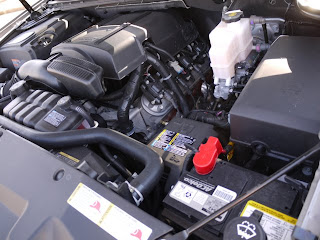
Yukon and Tahoe hybrid SUVs hit the market last year only fully loaded at upper-end sticker prices; GM has made the price of admission for the pickups more affordable with a decently equipped package starting at $38,995, including destination.

Probably not low enough to save money in the long run at today’s gas prices, but it’s still a compelling product and an impressive engineering achievement.

GMC Sierra and Chevrolet Silverado Hybrid Pickup Trucks Deliver Fuel Economy

Working on the theory that saving fuel is most important in the vehicles that consume the most, General Motors has introduced the GMC Sierra and Chevrolet Silverado hybrid pickup trucks.

Already out in Yukon and Tahoe SUVs, the two-mode hybrid was developed in a joint venture with Chrysler and BMW. The idea came about as a scaled-down version of GM’s hybrid bus drive train and is especially well-suited to vehicles that need some towing and hauling capability.

The system is distinct from most other hybrid systems because it can automatically run on straight mechanical power as well as pure electric or a combination of the two.

Based on the reengineered Sierra and Silverado pickups that debuted in 2007, the hybrids look the same as the crew cab versions of the base trucks with the exception of some hybrid badges, optional hybrid graphics and a standard tonneau cover that helps out aerodynamics.

The battery pack is underneath the rear seat, and the hybrid drive unit is about the same size as the transmission it replaces. It contains two compact electric motors (one reverses field to generate power) and four mechanical gears.

The two-mode hybrid system sees the most advantage in city driving, so GM planned an all-city driving route as the first demonstration for the press.

Starting off in a four-wheel-drive Sierra rated at 20 mpg n in both city and highway driving, I clocked an indicated average of 22.3 mpg over approximately 75 minutes of driving.

The small print in the EPA ratings do say 16 to 24 mpg is the “expected range for most drivers.” I was driving conservatively, but not to the extent of holding up traffic. My driving partner for the day nearly duplicated my efforts on the return trip with a 22 average mpg reading.

Like other hybrids, the engine shuts off when the vehicle is stopped so as not to idle unnecessarily.

When you start moving again, the hybrid pickups are capable of driving up to a stated 30 mph on electric power alone. The gasoline engine starts up automatically and seamlessly when it is needed.

As I had experienced previously in a GMC Yukon hybrid, it was difficult to start moving at a normal rate without the engine kicking in.

However, once it was rolling with a steady throttle input, the engine would turn off and we were able to run up to around 28 mph on electric power for a quarter mile or so at a time. Above that, engine power would do the driving duties.

Ideally, at the 35 mph cruising speeds we were getting, the truck would run on hybrid power, a combination of gas engine and electric drive, but this seemed hard to maintain unless we were on a longer stretch at steady speed.

When you back off the accelerator and coast, the batteries start recharging. The 6.0-liter V-8 engine will also automatically cruise in four-cylinder mode for extra fuel savings.

Next, two Sierra and Silverado hybrids were hooked to trailers and others were loaded with 800 pounds in their beds. We took a drive towing a 5,400-pound Sea Ray boat with inertia brakes on the trailer.

The hybrid was able to pull the boat in electric mode up to 15 mph. When briskly accelerating from a stop, the hybrid felt especially potent.

I asked lead development engineer John Turzewski what was the hybrid drive’s equivalent to first gear.

“You have infinite gear ratios,” he said “The 6.0-liter will do zero-to-60 in 8.4 seconds, plus you get the additional assist of the electric motors, which is instantaneous.”
In that regard, the hybrid might even be better for towing than a conventional truck, not to mention more fuel efficient. The short towing test loop resulted in a quite respectable indicated 15 mpg.

The Silverado and Sierra hybrids do deliver as promised, and the hybrid drive functions in a silent, seamless manner. However, their advantage can only be used to its full potential in a fairly narrow set of circumstances.

Extensive city driving, perhaps as a delivery truck or a longer stop-and-go commute are some areas where the hybrids would excel in efficiency.

On short trips, especially in cold weather, you won’t see any savings over a similar gas-only pickup with cylinder deactivation, as the engine must be fully warmed up before the hybrid drive starts functioning.

Yukon and Tahoe hybrid SUVs hit the market last year only fully loaded at upper-end sticker prices; GM has made the price of admission for the pickups more affordable with a decently equipped package starting at $38,995, including destination.

Probably not low enough to save money in the long run at today’s gas prices, but it’s still a compelling product and an impressive engineering achievement.
 
drag race most faster - Templates Novo Blogger 2008
This template is brought to you by : vio Blogger Templates